My FPL Story
I’ve played FPL since the 2006/07 season, long before xG and underlying numbers became part of everyday football conversation. Back then, FPL was all gut instinct, a bit of research, and a little luck.
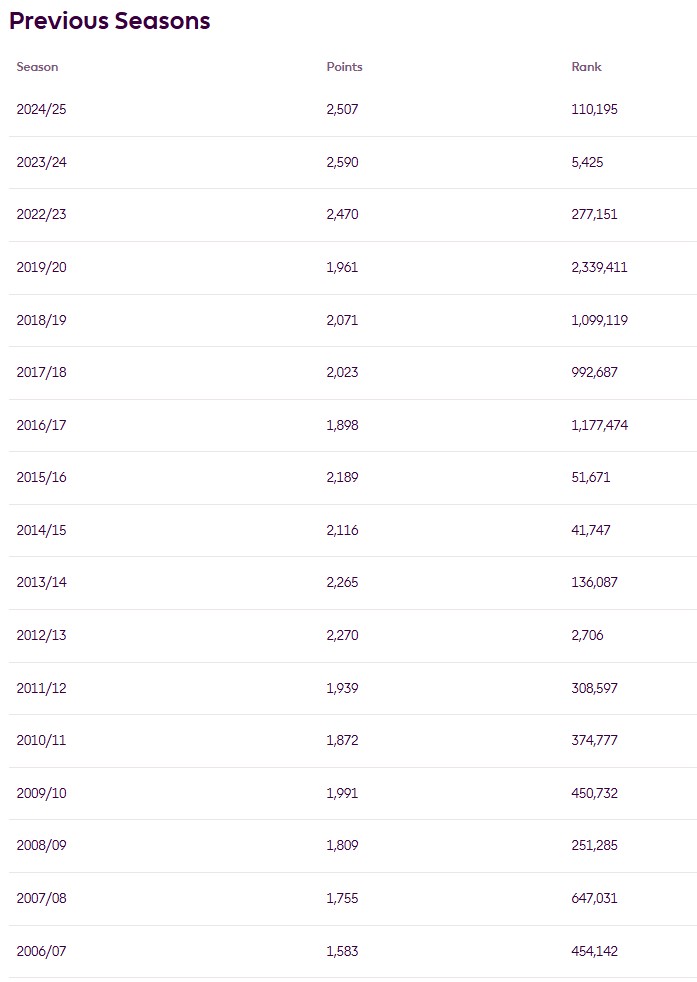
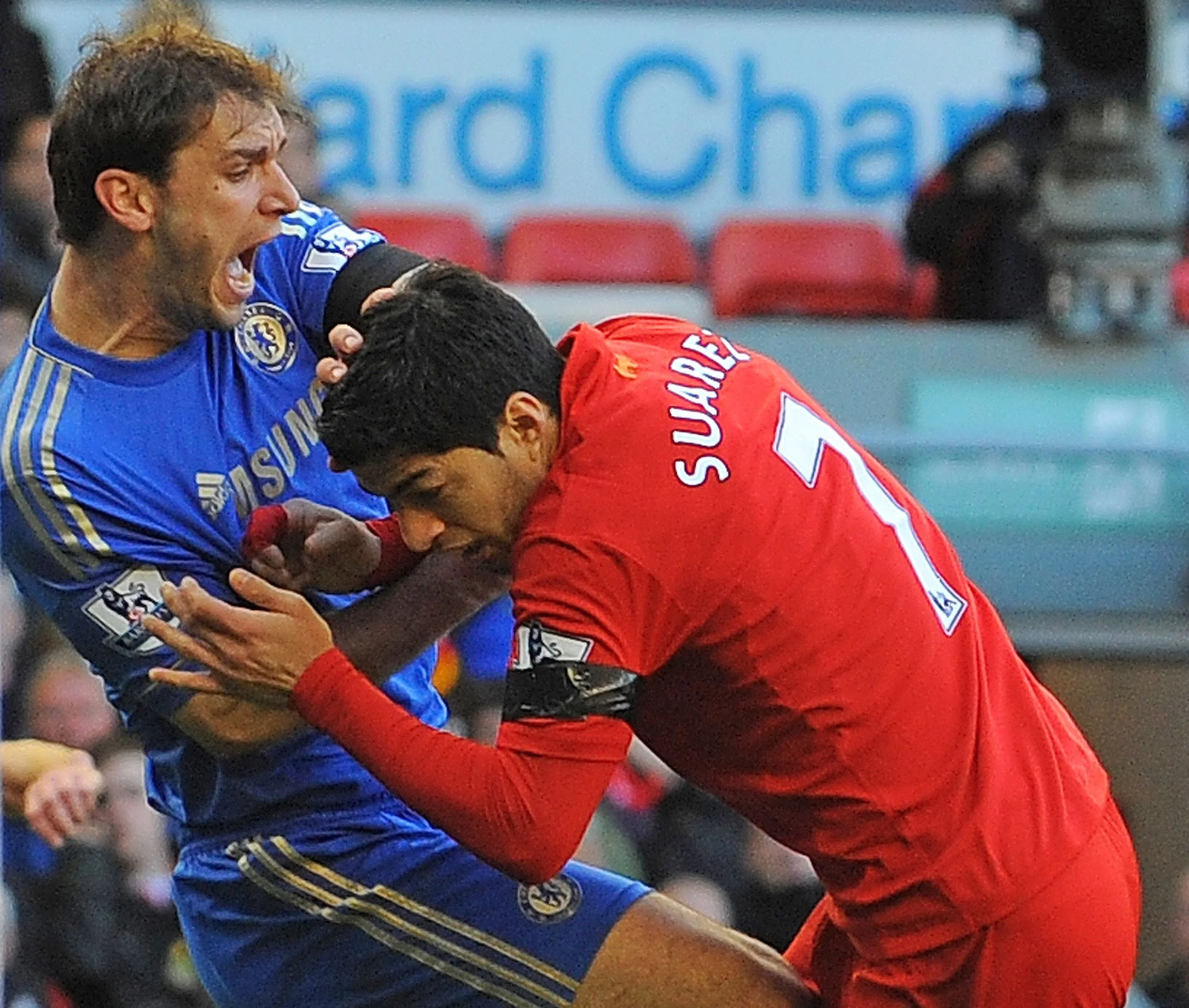
Between 2006/07 and 2015/16, that approach served me well. I was consistently competitive, finishing inside the top 100k three times, with a personal best of 2,706 in 2012/13. That season was chaos in the best possible way. Chelsea had an early Double Gameweek because of winning the Champions League and their Super Cup involvement, and for reasons I can’t fully explain, I captained Branislav Ivanović. He hauled, I shot into the top 10k, and I never left. Luis Suárez was unplayable that year, Robin van Persie led Man Utd to the league in Sir Alex Ferguson’s final season, and I captained the right player what felt like every Gameweek. It was a dream season.
From 2016/17 to 2019/20, my engagement dropped and my rank suffered. I vividly remember being in a pub on the opening night of one of those seasons, hurriedly throwing together a team just to reactivate a mini‑league I ran. A far cry from the weeks of pre season tinkering I do now.
For two seasons — 2020/21 and 2021/22 — I stopped playing entirely.
When I returned for the 2022/23 season, I came back rusty. I started poorly and spent the first half of the season outside the top one million. But then a single Gameweek reignited my passion for FPL and changed the way I approached the game.
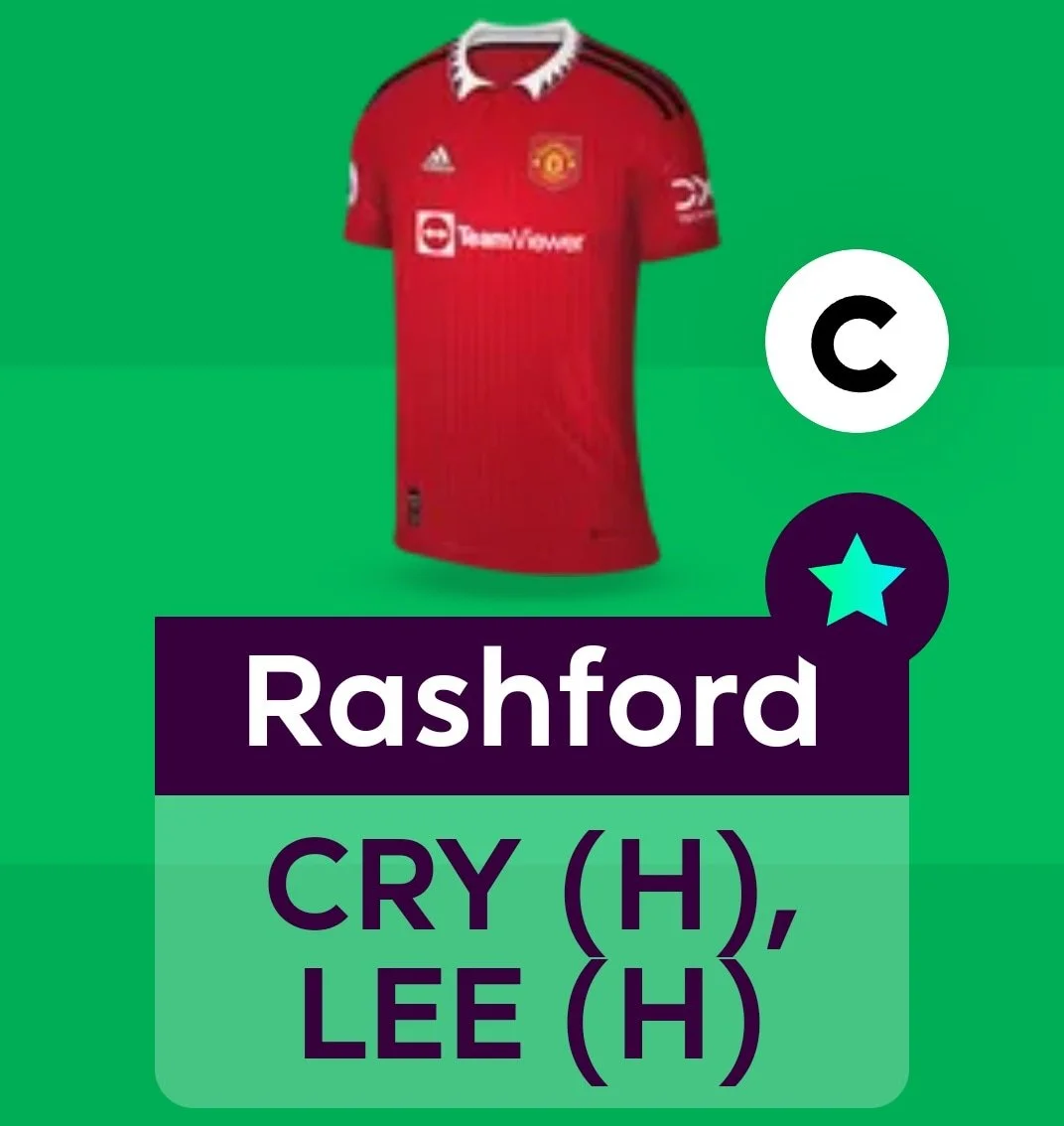
Gameweek 22. Marcus Rashford. Triple Captain.
I’d been playing half‑heartedly up to that point and still had all my chips. Man United had a Double Gameweek: Crystal Palace and Leeds, both at home. It was Erling Haaland’s first season in the Premier League and he was in monstrous form with a Double Gameweek coming, so the decision to Triple Captain Rashford wasn’t straightforward. Like many FPL managers, I toiled for many hours. This was the moment I spiralled deep into the data rabbit hole.
Rashford was in form, but what stood out was his home record. I opened Excel and built a basic spreadsheet to compare his home vs away output. It turned out he was scoring roughly an FPL point every ten minutes at Old Trafford. The underlying numbers backed it up, he was significantly more dangerous at home. With 2 tasty looking home fixtures in a Double Gameweek, the data pointed to a Rashford haul.
I Triple Captained Rashford. He delivered 20 points across the two fixtures, 60 with the chip, and my rank rocketed.
From that moment, I played seriously again. I finished that season with a rank of 277,151, which wasn’t spectacular, but a huge recovery from where I’d been.
That summer, I refined my spreadsheet into the earliest prototype of what would become FPL Support Engine. And in 2023/24, everything clicked. I won’t claim the model was the sole reason for my success, but it helped me test the decisions that mattered. Spotting Cole Palmer early, switching to Phil Foden when Salah went to AFCON, captaining Ollie Watkins when Haaland was unavailable. They were gut instinct calls, but supported by data.
I finished with a rank of 5,425. My second best ever finish and the one I’m most proud of. It should have been even better, if not for a late season Salah benching leak away to West Ham that sent me into a -8 panic.



In 2024/25, I continued refining FPL Support Engine and finished with a rank of 110,195. Not as explosive as the previous season, but still strong in an increasingly competitive game.
Across the 2025/26 season, FPL Support Engine properly evolved from a simple spreadsheet into a living, breathing data model shaped by everything I’d learned over nearly two decades of playing FPL. I finished that season with a rank of 41,523.
It’s not designed to play the game for you. It doesn’t replace instinct or the joy of making your own calls and seeing them pay off. What it does is give you structure. It helps you understand your squad, plan ahead, manage risk, and make decisions with clarity rather than in pre‑deadline panic.
As data has become more central to FPL and football in general, the landscape has become filled with tools - some excellent, some free, some personal projects. I genuinely consider FPL Support Engine different because every recommendation is truly tailored to your squad and your playstyle. No two users get the same insights.
Building it has reignited my love for FPL. Every Gameweek feels exciting. Every refresh of the model feels like uncovering something new.
I hope it brings you the same clarity, enjoyment, and green arrows it’s brought me.